Overview and Scope
Role: Associate Product Designer
Company: Loystar Alliance Systems Ltd
Project: uRewards — Desktop Web Application
Focus: UX/UI Design · Dashboard Design · Information Architecture · User Flows
Company: Loystar Alliance Systems Ltd
Project: uRewards — Desktop Web Application
Focus: UX/UI Design · Dashboard Design · Information Architecture · User Flows
Project Overview
uRewards is a loyalty and rewards platform by Loystar designed to help businesses build stronger customer relationships through reward programs, gift vouchers and customer engagement initiatives.
As the sole product designer working on uRewards, I was responsible for designing desktop interfaces that supported merchant activities, including loyalty program creation, reward configuration, gift voucher management and other account-related workflows.
My work focused on translating product requirements into structured, accessible interfaces that made it easier for merchants to navigate the platform and manage different reward experiences.
The Problem
Businesses need practical ways to reward customers, encourage repeat purchases and manage loyalty initiatives. However, configuring different reward programs can involve multiple settings, rules and information requirements.
The design challenge was to organize these functions into an experience that felt approachable to merchants while supporting different types of loyalty and gifting activities.
The central design question was:
How might we help merchants create and manage different loyalty and rewards programs through a clear, consistent and easy-to-navigate interface?
Design Goals
The goal was to create a desktop experience that balanced functionality with ease of use.
The design focused on making different reward options easy to identify, organizing program settings into understandable forms and maintaining consistency across related workflows.
I also considered how the interface could accommodate additional merchant functions without making the navigation unnecessarily complicated.
Design Approach
I approached the project by breaking down the platform's functionality into manageable workflows and considering how merchants would move between account management, loyalty programs and reward configuration.
I explored different ways of presenting reward options, organizing form fields and structuring the sidebar navigation. My designs used familiar interface patterns such as selectable program types, labelled input fields, dropdown menus and clearly grouped navigation items.
Throughout the design process, I worked on translating functional requirements into practical interface decisions, paying attention to layout consistency, information hierarchy and the relationship between different parts of the platform.
Exploring the Interface
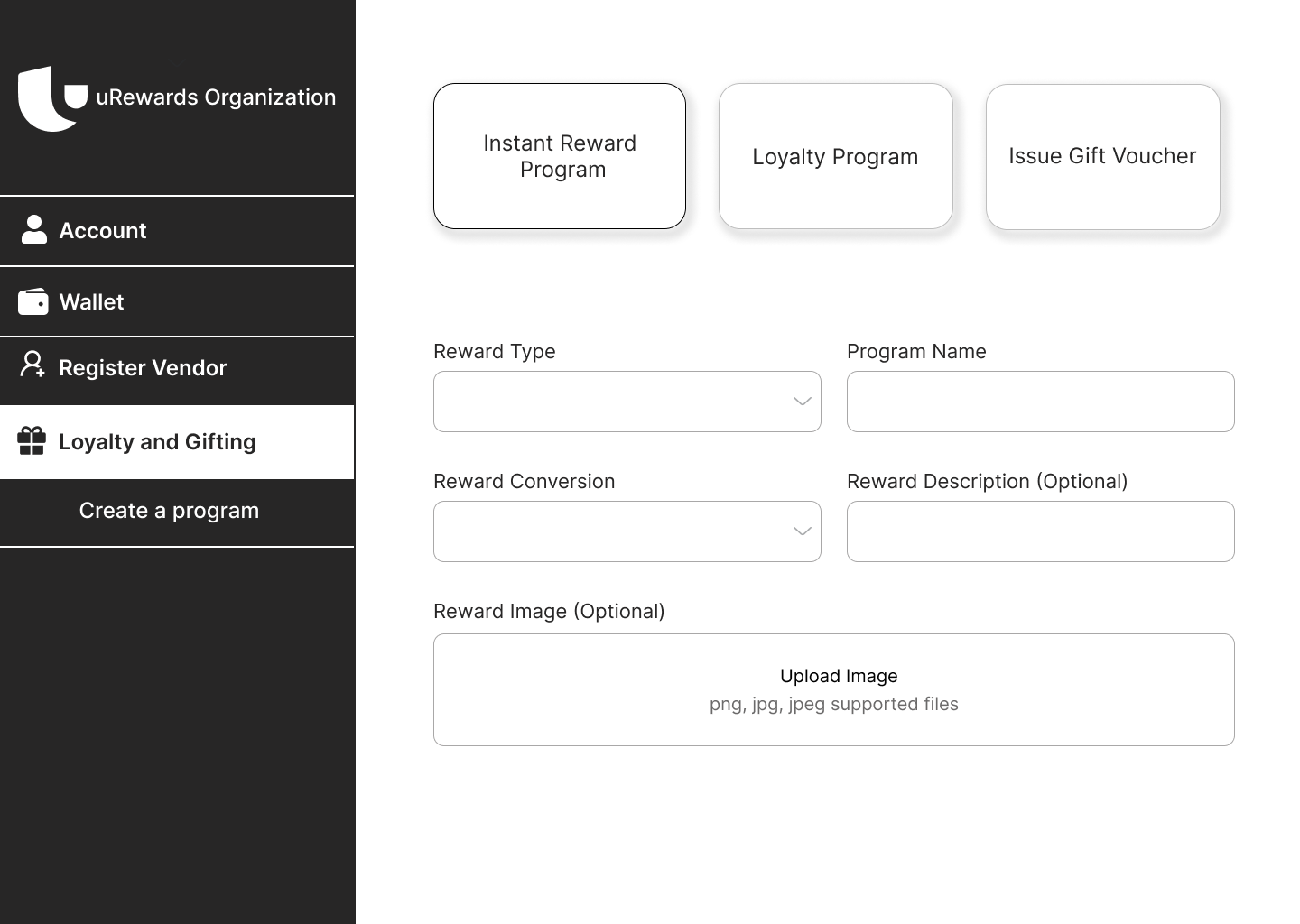
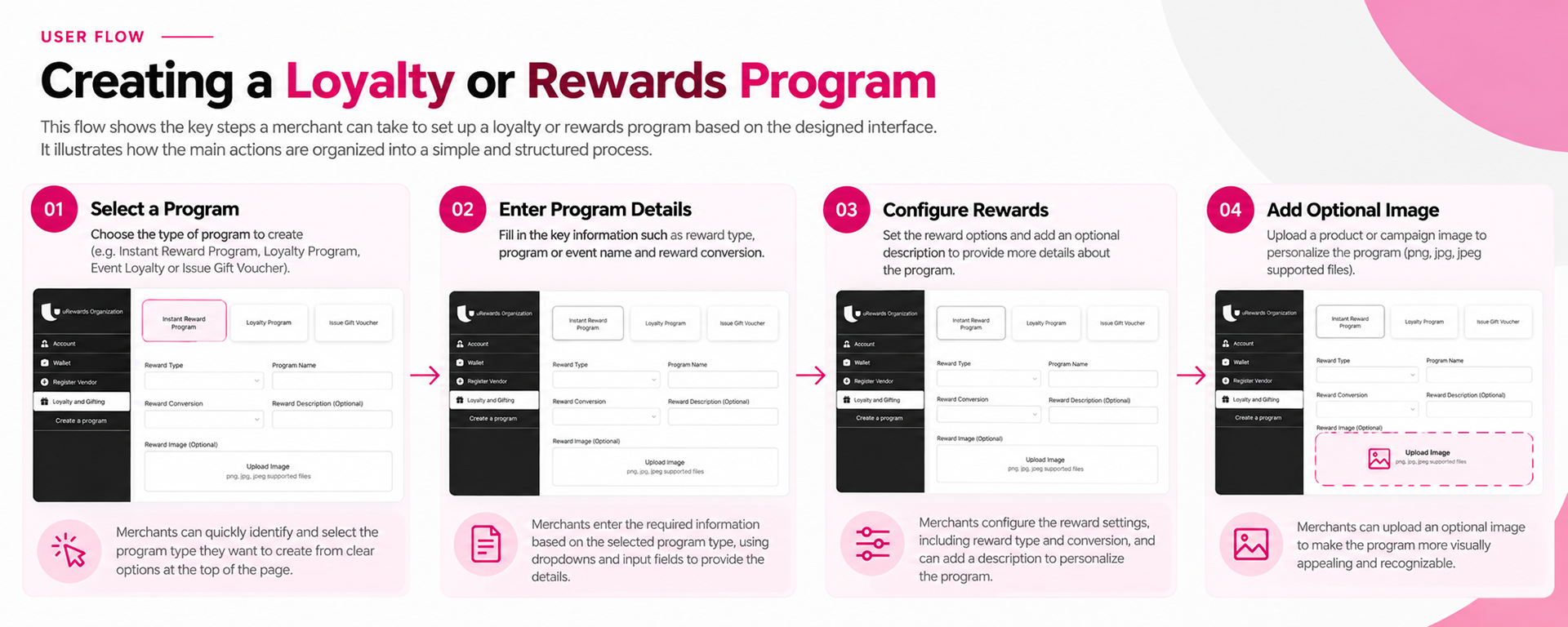
The interface explored three prominent options: Instant Reward Program, Loyalty Program and Issue Gift Voucher. Presenting these options together helped establish a clear starting point for merchants choosing the type of reward experience they wanted to configure.
Below these options, I organized the required information into a two-column form layout, with fields for reward type, program name, reward conversion and description, alongside an optional image upload.
The intention was to make the setup process visually structured and easy to follow while keeping related information together.
I also explored variations in the interface to accommodate different loyalty program types, including event-based loyalty.
These variations helped me consider how a shared design structure could support different requirements without needing a completely separate interface for every program.
The Solution
Event Loyalty Configuration
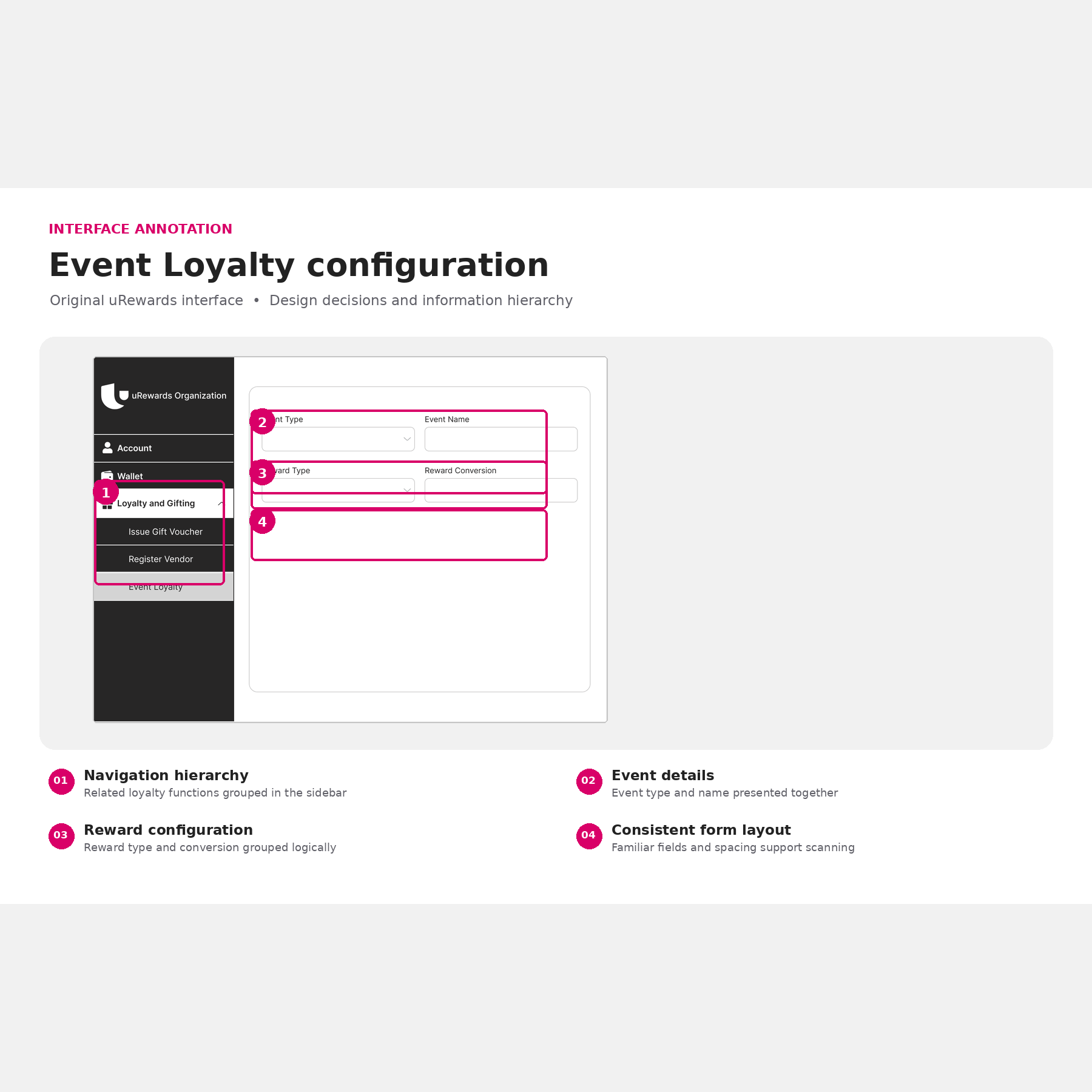
The Event Loyalty interface demonstrates a more focused configuration experience, with dedicated fields for event type, event name, reward type and reward conversion.
I organized these fields within a single contained form, allowing merchants to concentrate on the information relevant to the selected program.
The sidebar also provided a clearer hierarchy for navigating loyalty and gifting functions, grouping related activities under a shared section.
Together, these designs explored a consistent approach to reward configuration while allowing individual program types to have their own requirements.
Key Takeaways
Working as the sole product designer on uRewards strengthened my ability to take ownership of interface design decisions and translate complex product requirements into clear, practical user experiences.
I gained experience thinking beyond individual screens to consider how navigation, information architecture and recurring interface patterns work together across a larger SaaS product.
The project also helped me develop greater confidence in designing for business users, balancing functionality, usability and visual consistency while adapting my work to different product requirements.